





Which MPPT charge controller features matter most for reliability?
- 1. What is an MPPT Charge Controller and How Does It Enhance Solar System Efficiency?
- 2. How Does Temperature Compensation in MPPT Controllers Affect Battery Health?
- 3. What Safety Features Should I Look for in an MPPT Charge Controller?
- 4. How Does an MPPT Charge Controller Adapt to Different Battery Types?
- 5. What Role Does an MPPT Charge Controller Play in System Monitoring and Maintenance?
- 6. How Do Environmental Factors Impact the Performance of MPPT Charge Controllers?
1. What is an MPPT Charge Controller and How Does It Enhance Solar System Efficiency?
An MPPT (Maximum Power Point Tracking) charge controller is a device that optimizes the power output from solar panels to charge batteries efficiently. Unlike traditional controllers, MPPT controllers continuously adjust the electrical operating point of the panels to extract maximum power, especially under varying sunlight conditions. This dynamic adjustment ensures that the solar system operates at peak efficiency, converting more solar energy into usable electrical power. For instance, in low-light conditions, an MPPT controller can increase the charging efficiency by up to 30% compared to non-MPPT controllers.
2. How Does Temperature Compensation in MPPT Controllers Affect Battery Health?
Temperature compensation is a feature in MPPT charge controllers that adjusts the charging voltage based on the ambient temperature. Batteries charge differently at various temperatures; for example, at 5°C, the charging setting for a 12V battery may change by 0.15 volts. This adjustment helps prevent overcharging or undercharging, which can lead to reduced battery lifespan. By incorporating temperature compensation, MPPT controllers ensure that batteries receive the appropriate charge, enhancing their longevity and performance.
3. What Safety Features Should I Look for in an MPPT Charge Controller?
When selecting an MPPT charge controller, it's crucial to consider safety features that protect both the system and the user. Key safety mechanisms include:
Overvoltage Protection: Prevents the system from operating at dangerous voltage levels that could damage equipment or pose a fire hazard.
Undervoltage Protection: Ensures the system doesn't operate below safe voltage levels, which could lead to equipment malfunction.
Short-Circuit Protection: Safeguards the system against potential short circuits that could cause damage or pose safety risks.
Overtemperature Protection: Monitors the controller's temperature to prevent overheating, which can lead to component failure.
These features are essential for ensuring safe and reliable operation of the solar panel system.
4. How Does an MPPT Charge Controller Adapt to Different Battery Types?
MPPT charge controllers are designed to be compatible with various battery types, including lead-acid, lithium-ion, and nickel-cadmium. They achieve this adaptability through:
Programmable Settings: Allow users to set specific voltage parameters tailored to each battery type.
Temperature Compensation: Adjusts charging voltages based on ambient temperatures, which is crucial for battery health.
Advanced Charging Algorithms: Employ multi-stage charging processes to optimize battery charging cycles, enhancing efficiency and extending battery life.
These features ensure that the controller delivers the appropriate charging profile for each battery type, maximizing performance and longevity.
5. What Role Does an MPPT Charge Controller Play in System Monitoring and Maintenance?
MPPT charge controllers often come equipped with advanced monitoring features that are invaluable for system maintenance and optimization. These features include:
Remote Monitoring: Allows users to access real-time data from any location, enabling prompt troubleshooting and maintenance.
Data Logging: Provides detailed analysis of the system’s performance over time, which can be used to optimize operation and identify patterns.
Fault Diagnostics: Identifies and reports issues within the system, facilitating timely repairs and minimizing downtime.
By incorporating these monitoring capabilities, MPPT controllers help ensure the system operates efficiently and reliably over its lifespan.
6. How Do Environmental Factors Impact the Performance of MPPT Charge Controllers?
Environmental conditions such as temperature fluctuations, humidity, dust, and precipitation can significantly affect the performance of MPPT charge controllers. To mitigate these effects, high-quality controllers are equipped with protective features such as:
Reverse Polarity Protection: Prevents damage if the input connections are reversed.
Short-Circuit Prevention: Safeguards against potential short circuits that could cause damage or pose safety risks.
Temperature Compensation: Adjusts charging voltages based on ambient temperatures, which is crucial for battery health.
These safeguards add an extra layer of reliability, reducing unexpected failures and lowering the risk of costly downtime.
In conclusion, selecting an MPPT charge controller with these essential features—efficiency optimization, temperature compensation, comprehensive safety mechanisms, adaptability to various battery types, advanced monitoring capabilities, and environmental protections—ensures a reliable and efficient solar power system. For personalized recommendations and a quote tailored to your specific needs, please contact us at info@csinverter.com or visit our website at www.csinverter.com.


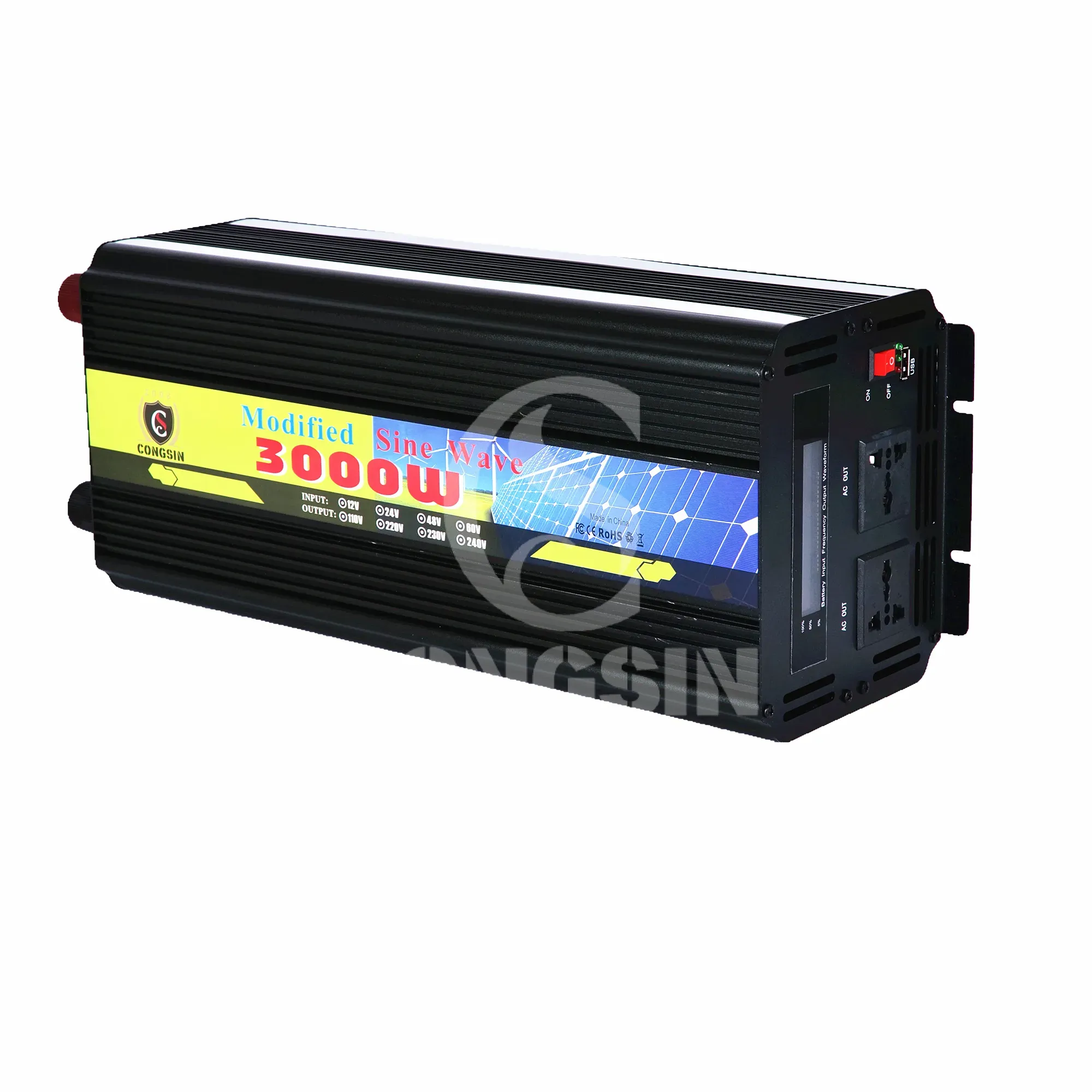
Modified Sine Wave Inverters
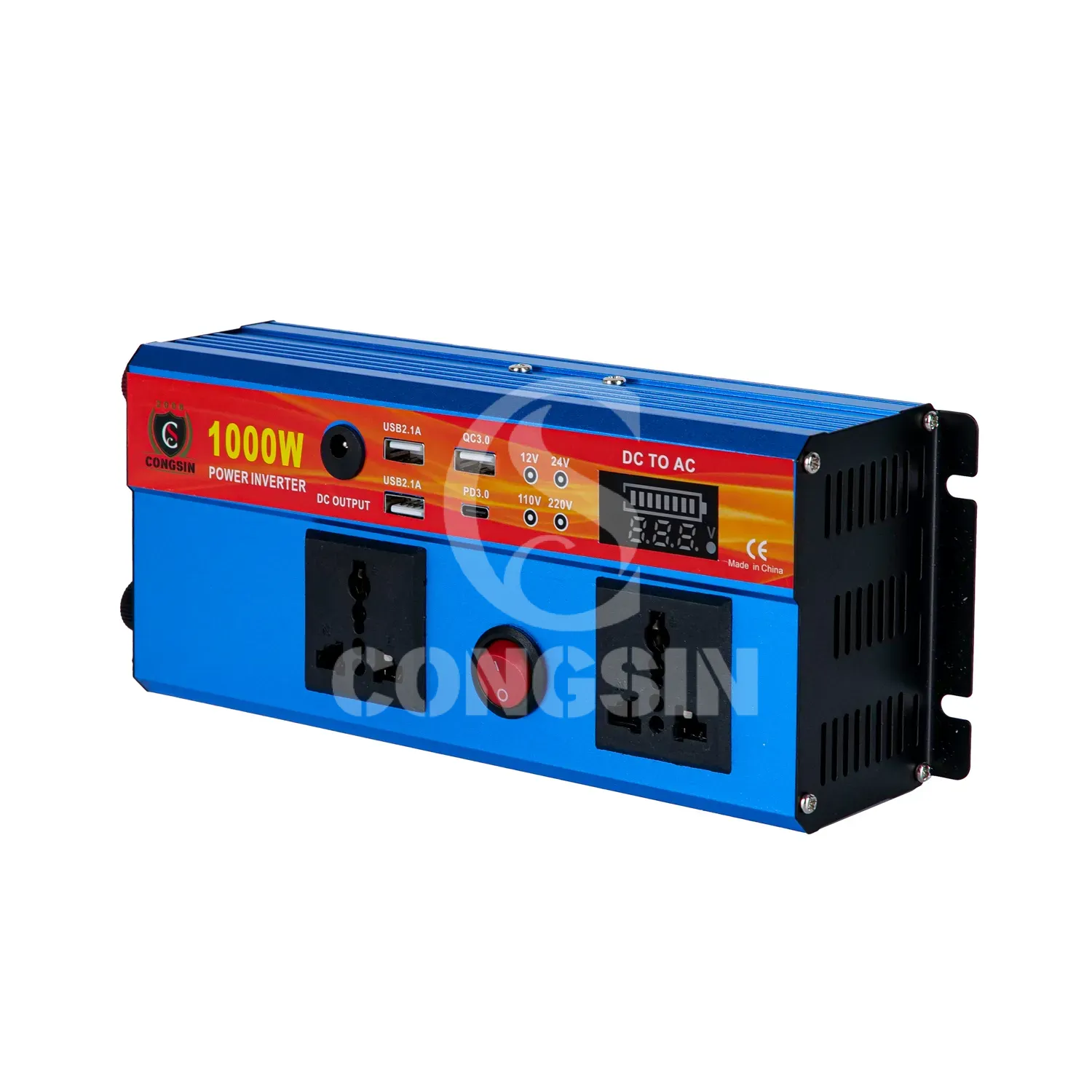
Which regional plugs can be used with the universal socket?
The universal socket supports most national plug specifications, such as GB, US, EU, etc. (some require adapters), and can meet the use of devices in multiple regions.
Can this 2000W inverter power an air conditioner?
If the air conditioner power is within 2000W and the input is AC220V, it can supply power normally. It is recommended to ensure stable power when starting.
Can I customize the color and logo?
Yes, OEM/ODM customization is supported.
Can this inverter power a laptop?
If the laptop power is within 150W and the input is AC220V, it can supply power normally.
Products
Can I customize the logo?
Yes, OEM/ODM service is available.
Get in Touch with Our Team
You can also communicate with us directly through our online contact form. Please fill in the following information, and our team will contact you as soon as possible after receiving your message.

CONGSIN is a trusted OEM factory for power inverters, solar charge controllers, and DC converters. Reliable solutions for global B2B buyers.
 High Quality
 7/24 Service
 Guaranteed Warranty
© 2025 Congsin. All Rights Reserved.